
Continuing the security system mentioned earlier
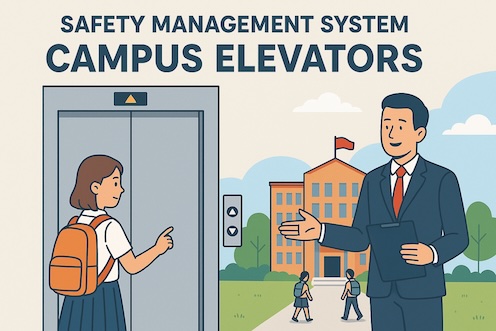
Continuing the concept of "safety management system" from the previous article, this article will focus on the school scenario and explore how campus elevators can improve overall operational efficiency through systematic planning. The school has dense pedestrian flow and frequent use, which requires higher stability, speed, and safety of elevators. Therefore, early design is particularly important.
Common Problems and Feasible Renovation of Campus Elevators
Many schools still use old elevators, which have problems such as slow operation, loud noise, high energy consumption, and high frequency of malfunctions, affecting the passage of teachers and students, and even causing congestion and safety hazards. In response to these situations, overall performance can be improved by upgrading the control system, optimizing the car structure, updating the drive system and energy-saving modules, and other methods. The requirements for different buildings also vary: teaching buildings emphasize quick response, experimental buildings require higher load-bearing capacity, and dormitory buildings place more emphasis on quietness and stability.
School scenes need to strengthen maintenance and remote monitoring
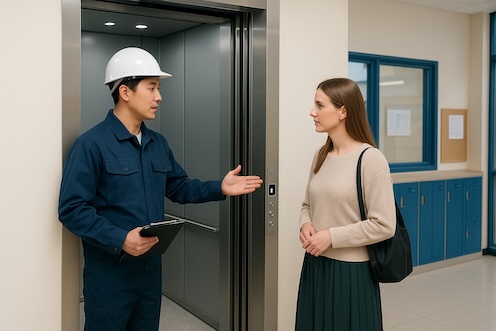
Compared to commercial buildings, campuses rely more on long-term stable operation, so the maintenance system must be improved. We can arrange maintenance according to the school schedule to avoid affecting teaching; At the same time, remote monitoring can be provided to achieve fault warning and reduce the risk of elevator stoppage.
Long term benefits brought by overall planning
As emphasized in the previous section on "systematic management", the renovation of campus elevators should also focus on the overall plan rather than replacing individual components, in order to improve management efficiency and reduce long-term costs.
If you are planning to add elevators to your school, you can contact us directly and I will provide you with a complete solution and quotation.