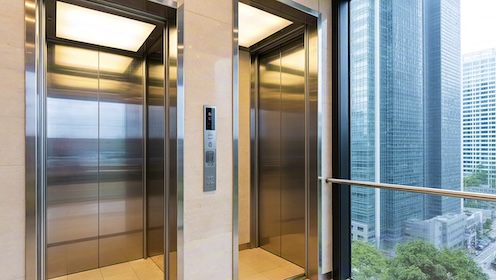
In modern cities, elevators have surpassed simple vertical transportation and become a reflection of building quality, service level, and lifestyle. A survey shows that 88% of people in first tier cities believe that elevator experience affects building evaluation, and 65% of people have given up buying or renting a house due to elevator problems. Efficiency, safety, and aesthetics are shaping modern urban living standards.
Intelligent technology enhances efficiency
The upgraded AI scheduling system and target floor reservation function in Shenzhen Science and Technology Park have reduced the average waiting time from three minutes to less than one minute. The maglev elevator in Shanghai's super high-rise buildings achieves high stability and a daily carrying capacity of 120000 passengers. Experts point out that the competition for elevator efficiency has entered the millisecond level, and one second of waiting can affect the overall operation of buildings by 15%.
Internet of Things and Predictive Maintenance to Ensure Security
After the Hangzhou elevator safety incident, the property intercepted potential faults through an IoT monitoring system. Hundreds of sensors monitor real-time data on steel wire rope wear, guide rail vibration, etc., with a prediction accuracy of 99.7%. The Beijing International Trade Center has established a "health record" for elevators, recording over 300 parameters to achieve closed-loop management throughout the entire lifecycle and ensure passenger safety.
Aesthetic Design and Cultural Experience
High end properties in Chengdu adopt Chinese style wooden decorations and intelligent lighting, balancing aesthetics and ventilation; The "Starry Sky Elevator" in a five-star hotel in Guangzhou is equipped with an LED dome to simulate the Milky Way, turning a short 30 second elevator ride into an immersive experience. Unique design reduces building vacancy rates, reflecting commercial value and cultural charm.
Space innovation and digital integration
The Tokyo Future Tower experimental site achieves lateral movement through maglev tracks and multi cabin systems, increasing the usable building area by 40%. Singapore deeply integrates elevators with BIM to achieve digital management from design to operation, reducing lifecycle costs by 35%.
Elevator: the interface between life and technology
Elevators are no longer just tools for going up and down stairs, but urban bridges that integrate efficiency, safety, aesthetics, and innovation. From technology driven in Shenzhen, to aesthetic upgrades in Chengdu, to spatial innovation in Tokyo, elevators carry practical functions and emotional experiences, becoming an important symbol of modern urban living quality.