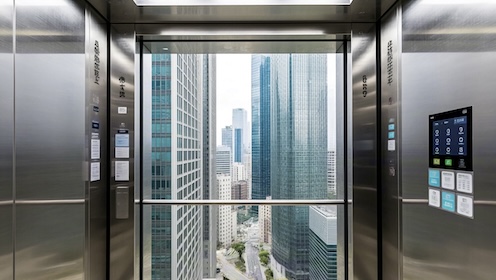
In modern cities, elevators are no longer just "lifting tools", they connect floors and also carry the rhythm of urban life. Every day, millions of people experience interactions between people and technology, people and cities.
Technology driven: Efficiency and Safety
Elevator iteration always prioritizes efficiency and safety. Mitsubishi Elevator optimizes the traction system and motor to achieve a running speed of 13 meters per second, and is equipped with a shock resistant door protection system to ensure safe high-speed operation. The medical elevators used in Suzhou's tertiary hospitals can accommodate both beds and equipment simultaneously. The toothless permanent magnet synchronous traction machine reduces energy consumption and noise levels below 50 decibels, providing patients with a quiet environment and reflecting the combination of technology and practical needs.
Humanistic Civilization: Etiquette and Safety
The use of elevators reflects social civilization. A courier in an office building in Beijing was dissuaded due to overcrowding, indicating that some people were ignoring public order. After the "Elevator Civilization Month" event in Hangzhou, the elevator failure rate decreased by 40%, and residents' satisfaction increased to 92%. Technical security requires the support of humanistic literacy in order to achieve harmonious coexistence.
Intelligence and Market Transformation
Consumers are gradually shifting from being price oriented to being value oriented. Suzhou's local brand share has increased by 15 percentage points, relying on the "imported core components+local customization" model and intelligent group control system, the average waiting time during peak hours has been reduced to 30 seconds. In the renovation of an old residential area, a community in Shanghai upgraded its hydraulic elevators to permanent magnet synchronous elevators, reducing annual electricity consumption by half and maintenance costs by 60%, thus improving the quality of life for residents.
Intelligence and the Future
The Internet of Things has turned elevators into "smart terminals". Hitachi elevators in Shenzhen park can analyze data in real-time, warn potential faults in advance, and guide passengers with facial recognition. By 2024, the size of China's smart elevator market will exceed 20 billion yuan, and 85% of users are willing to pay additional fees for smart functions. The development history of elevators is also a history of humanity breaking through spatial limitations. The combination of technology and humanities, efficiency and warmth coexist, and elevators have become carriers of a better life.