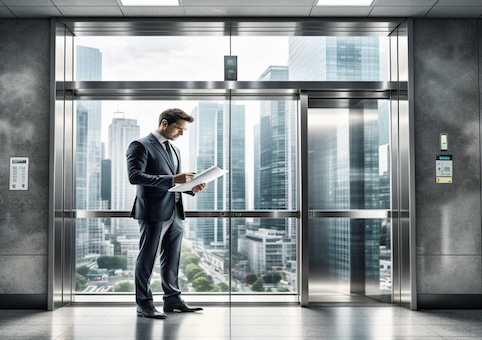
At 7:30 in the morning, the originally smooth schedule was interrupted by a red "maintenance in progress" prompt. For Marcus Watson, this is just a small episode in daily life, but it also reveals another side of urban life. In cities with towering buildings, elevators almost determine people's pace - and a wait that exceeds expectations by 30% is enough to double anxiety levels. The few minutes of stagnation were not only a delay in time, but also a rupture of the modern order of life.
The four hidden pain points
Time misalignment: On average, North American office workers waste more than 8 minutes waiting for the elevator every day, causing 78% of them to depart early or late, disrupting their daily lives.
Space pressure: When 4 or more people are squeezed into a space of only 1.5 square meters, over 85% of people will experience physiological stress reactions.
Asymmetric information: Approximately 67% of elevator failures worldwide are not notified in advance, and only 12% of buildings disclose maintenance plans.
The energy paradox: Even when idle, elevators still consume about 3.7% of the building's electricity - the cost of efficiency is much higher than imagined.
Fairness of vertical transportation
Columbia University School of Architecture professor Erin Kaufman proposed the concept of "vertical transportation equity": if the elevator system only pursues efficiency, it is actually depriving vulnerable groups of their right to travel. Her research shows that after installing a voice call system, the elevator usage rate of visually impaired people increased by 41%; Intelligent weight recognition technology has reduced waiting time for wheelchair users by 58%. True accessibility is not welfare, but the bottom line of urban design.
When intelligent systems become biased
Technological upgrades do not always bring fairness. In an office building in Chicago, the facial recognition function of the elevator has turned "VIP exclusive" into a new form of inequality. 73% of ordinary employees complain that waiting times have been extended. The report from the Institute of Human Computer Interaction at the University of Tokyo states that "algorithmic discrimination is often more covert than human discrimination
Future Vertical Mobility
The elevator reform in 2025 may help people regain a sense of control. The virtual queuing system allows people to book elevator rides using their mobile phones, reducing waiting anxiety by 36%; The Siemens predictive maintenance system can detect faults 140 hours in advance with an accuracy rate of 89%; ThyssenKrupp's new modular elevator cabin can expand by 23% during peak hours.
When Marcus was wiping coffee stains in the conference room, he thought to himself: If the elevator could provide early warning and display real-time load, perhaps everything would be different. These seemingly subtle improvements are the real competition points for urban competitiveness in the next decade - making vertical travel smarter and more humane.