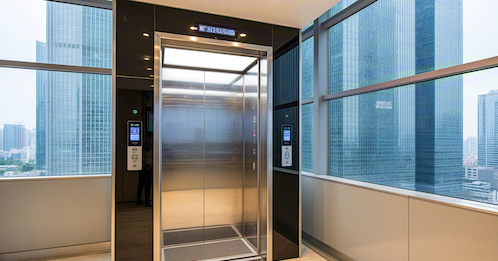
In the bustling city center, an office building carries the ups and downs of hundreds or even thousands of people every day. For visually impaired girl Amy, this ordinary space is like an invisible barrier. She works at a small design company, and although she cannot see colors, she uses her keen hearing and touch to depict dreams. She is familiar with the touch of every wall, but still has to explore and move forward in the darkness. The elevator without Braille allowed her to grope around based on her memory, and a mistake led to misunderstandings and blame. In the silent rise and fall, she felt lost and uneasy; The sudden shaking almost caused her to fall, and at that moment, what she felt was not fear, but deep neglect.
The inconvenience hidden in the crowd
People like Amy are not uncommon. There are approximately 253 million visually impaired people worldwide, and over 70% of them have encountered difficulties while riding elevators - the lack of Braille and voice guidance is the norm they face. The dilemma on the other end comes from the elderly. Tom in the office building is particularly cautious every time he goes in and out of the elevator - because the drop between the ground and the car makes him worried about falling. Even worse, the elevator door closed too quickly, and he almost got caught several times. With the intensification of global aging, over 1 billion elderly people are facing the same hidden concerns. A survey shows that about 60% of elderly people believe that there are safety risks associated with elevator switch speeds being too fast, and more than half of them complain that the position of the handrails is unreasonable and cannot provide stable support.
Make accessibility a fundamental design
To truly serve everyone, change must start with both design and management. Manufacturers should incorporate accessibility concepts into standard configurations - adding braille buttons, voice announcements, and door delay functions; The property management should regularly check the status of the elevator, maintain soft lighting and smooth operation; At the social level, public welfare activities and volunteer services should also be carried out to enhance the public's understanding and empathy towards special groups.
Make lifting no longer a burden
The renovated elevator has been completely refreshed. Amy is no longer afraid of getting lost, and voice prompts guide her to travel calmly; Tom can also enter and exit with peace of mind, the elevator doors close more slowly, and the handrails are stable and easy to grip. The once tense and cramped space has now been infused with a humanized warmth. Elevators are no longer just cold mechanical passages, but have become symbols of goodwill in the city - allowing every ascent and descent to carry a sense of understanding and protection.