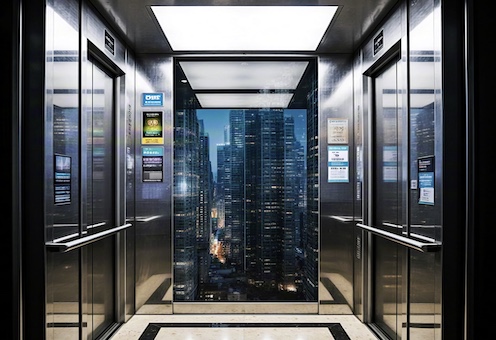
In modern urban life, elevators have become an indispensable part of people's daily commuting. However, in this small enclosed space, the noise of advertisements is making it impossible for people to escape. Tom, a New York office worker, has to go up and down stairs every day amidst the noisy sound of advertisements - as soon as the elevator door closes, piercing electronic cigarette ads immediately sound, and colorful promotional posters are even posted on the walls. A survey shows that there are an average of five to eight advertisements in elevators of some office buildings, with a volume generally exceeding 60 decibels, which is louder than normal conversations. In this inescapable space, advertising has long transformed from "information transmission" to "visual and auditory bombardment".
The lighting issue is equally glaring
In addition to advertising noise, elevator lighting has also become another problem. At times, the elevator feels like a dim cave—shadows swallowing the floor, every step uncertain and uneasy. Other times, the lights glare so harshly that the space becomes blinding, the sharp beams of LED piercing tired eyes. Both extremes, though often overlooked, quietly endanger safety and comfort: dimness hides potential hazards beneath one’s feet, while excessive brightness strains the eyes and exhausts the mind. Such small flaws in lighting design can turn a simple elevator ride into an unpleasant and even risky experience.
The key to improving the experience
To bring the elevator back to comfort, it requires joint efforts from multiple parties. Property management should strengthen advertising placement management, reasonably control the quantity and volume, and regularly inspect lighting equipment. Adjust brightness according to time and environment to create a soft and comfortable space for passengers. Advertisers should also be aware that excessive marketing can only lead to resentment and should convey information in more creative and gentle ways. Passengers can proactively provide feedback to the management and work together to promote environmental improvement.
Conclusion: Return vertical travel to comfort
Although elevator advertising and lighting issues are small, they reflect people's pursuit of quality of life. When technology, management, and humanistic care are combined, elevators will no longer be cold iron boxes, but will become warm corners in the city. Every ascent and descent is no longer the torment of noise and glaring light, but a brief moment of tranquility that makes the city's' vertical journey 'more comfortable and warm.