
In the previous article, it was mentioned that "old buildings often face high costs and risks during renovation due to structural limitations," a point that is even more pronounced on campuses. As schools expand, teaching buildings are added, and student numbers continue to grow, many early campus structures without elevators gradually reveal issues of traffic congestion and safety hazards.
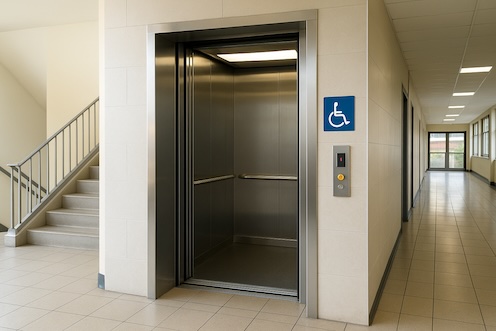
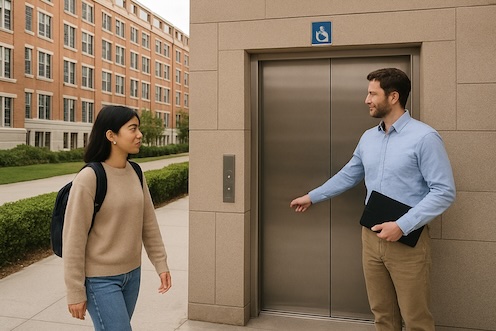
New conflicts arising from campus expansion
Taking a key high school in southern China as an example, the original teaching building had narrow staircases with steep slopes, leading to severe congestion during peak hours. With the added demand for accessibility, the vertical traffic pressure further increased. Due to limitations in shaft dimensions and floor height differences, traditional elevators were difficult to install directly, and construction could also disrupt teaching activities.
The core pain points in campus usage scenarios
The logic for using campus elevators is more stringent:
· Passenger flow is concentrated within 10 minutes before and after classes;
·Must incorporate functions for both student and teacher passage, accessibility, and equipment transportation;
·The access control system must be synchronized with campus management;
·Long-term high-frequency operation demands extremely high stability.
The management is concerned that, much like the "A Record Of Elevator Renovation In An Old Shopping Mall" , the campus will also face issues of repeated construction and uncontrollable budgets.
Solutions for Wisdom and Low-Disruption Construction
Professional teams typically employ: narrow shaft and machine-room-less technology to minimize wall breakage; campus scheduling algorithms to enhance peak-hour traffic efficiency; silent traction and low-vibration guide rails to ensure a conducive teaching environment. The IoT monitoring system further reduces failure rates in real time.
Why is this the best time for construction
Education bureaus across the country are advancing the "Accessible Campus Construction" and "Renovation of Aging Campuses" initiatives. During this phase, schools that engage with suppliers can prioritize obtaining models aligned with policy directions, customized designs, holiday construction schedules, and more competitive pricing.
For schools currently planning renovations or upgrades to accessibility facilities, initiating collaboration at this stage can effectively reduce costs and risks while enhancing the overall safety image of the campus. If your institution has relevant plans, you may contact us at any time to obtain professional assessments and customized solutions.