
In the daily operations of large commercial complexes, elevator congestion during peak hours is often simply attributed to "insufficient quantity" or "equipment aging." However, in most cases, the real factor affecting efficiency is the deviation between initial passenger flow forecasting and dispatching strategies.
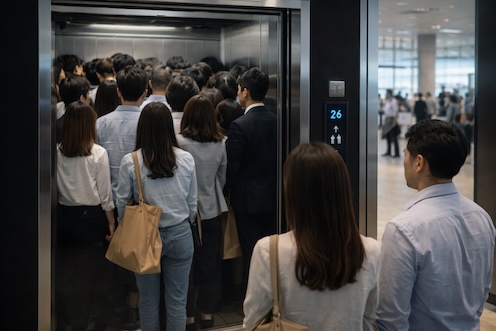
Passenger flow prediction deviation leads to system imbalance
Many projects rely on static models for calculations during the planning phase, neglecting the combined effects of holiday activities, promotional events, and temporary passenger surges. When actual passenger flow far exceeds estimates, elevator operation rhythms are disrupted, leading to rapid increases in waiting times and even localized congestion on certain floors.
Decision-making logic repeats similar fallacies
As analyzed in the previous article on the issue of mixed use of sightseeing elevators and freight elevators, elevator efficiency problems often stem not from equipment performance but from flawed initial functional positioning and usage scenario judgments. In this case, the equipment itself meets standards, but the lack of peak simulation and redundancy design results in insufficient system load-bearing capacity.
Fixed scheduling struggles to cope with fluctuations
Even with a group control system in place, if the operational logic lacks dynamic optimization capabilities, it will still result in delayed responses to sudden passenger surges. Prolonged inefficiencies not only degrade customer experience but also undermine the overall operational efficiency of commercial spaces.
From Single-Machine Thinking to System Management
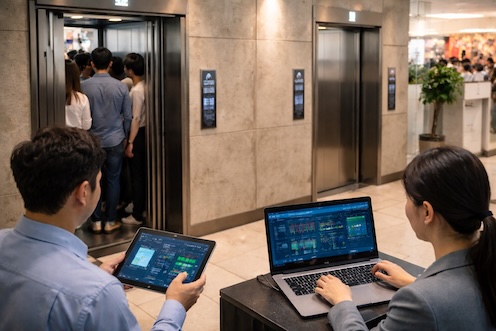
Mature projects begin introducing passenger flow data monitoring and time-based scheduling strategies, integrating elevators into the overall operational model rather than treating them as isolated devices. Only through preliminary simulations and subsequent dynamic adjustments can peak pressure be effectively alleviated.
If your project experiences similar efficiency fluctuations during peak hours or is planning elevator configurations for commercial spaces, it is recommended to reassess the solution at the system level. If necessary, you can also contact us to jointly analyze an optimization path that better aligns with actual operational needs.