
In the previous article, we discussed the issues of data loss of control and scheduling chaos caused by excessive intelligence in hotel elevators. However, when the system actually malfunctions, what is tested is not just efficiency, but the safety boundaries and emergency capabilities of the elevator.
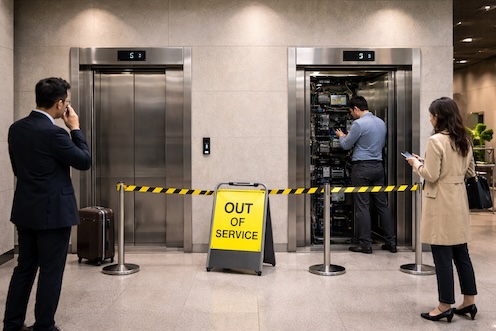
What happens when an intelligent system fails
Some hotels, after adopting cloud-based group control systems, experience short-term disruptions in scheduling when database anomalies or network interruptions occur, leading to repeated door opening and closing, incorrect floor stops, or collective waiting for commands. Without independent local control logic, recovery times are significantly prolonged, affecting operational order during peak hours.
Safety design is diluted by functional expansion
During the intelligent transformation process, functions such as facial recognition and passenger flow prediction are continuously added, but hardware redundancy and backup control space are not simultaneously strengthened. When the main system malfunctions, the backup logic cannot quickly take over, leading to prolonged elevator downtime and amplified risks.
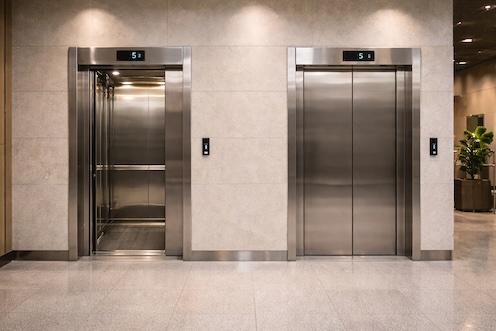
The emergency mechanism lacks practical verification
Although most projects document multiple protection mechanisms in technical files, scenarios such as network disconnection, server crashes, or localized conflicts often lack practical drills, resulting in a gap between theoretical security and actual response.
From "intelligence first" to "safety first"
Mature operators are beginning to strengthen local independent control and mechanical backups, while retaining core scheduling functions and defining system boundaries to ensure basic operations can be maintained in extreme scenarios.
If your project is advancing with elevator intelligent transformation or has encountered operational fluctuations, please feel free to contact us to jointly evaluate a more robust system architecture and emergency plan.