
In the previous article, we mentioned that elevator issues in cultural venues often stem not from the equipment itself but from hidden risks planted during the early procurement and design decision-making phases. However, in actual projects, even after procurement and installation, the overlooked acceptance and handover stages are typically what amplify the risks.
Formal acceptance conceals real issues
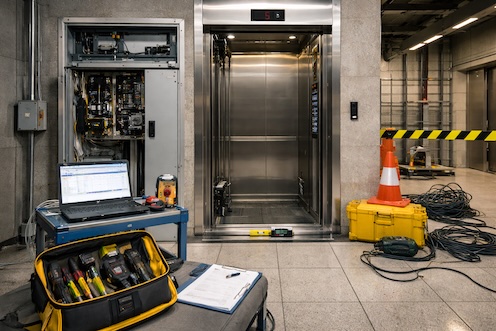
Under the pressure of tight schedules and opening deadlines, many projects simplified elevator acceptance to "power-on—operation—sign-off." As long as the elevator can move up and down and pass basic inspections, it is deemed qualified, without systematic verification of floor leveling accuracy, start-stop comfort, noise control, and full-load conditions. Such issues remain invisible in the short term but tend to emerge en masse after formal operation.
The absence of the user leads to distortion of the standard
In some cultural venue projects, the acceptance process is primarily conducted by the construction party and the installation unit, with insufficient involvement from the future operational management team. This results in an acceptance focus that leans more toward technical compliance rather than actual usage requirements. For instance, the transportation routes for exhibits and the methods for moving specialized equipment often remain unverified during the acceptance phase.
Temporary rectification leads to long-term hidden dangers
When deviations in the elevator shaft dimensions or door opening height are discovered during the acceptance phase, they are often adjusted on-site to pass. While such passive corrections ensure the delivery timeline, they may compress maintenance space, affect operational stability, and create hidden risks for future safety and reliability.
From "delivery compliance" to "sustainable operation"
An increasing number of mature projects are beginning to treat elevator acceptance as a pre-operational system evaluation rather than a procedural checkpoint. Only by simulating real usage scenarios, introducing professional assessments, and simultaneously planning maintenance and emergency mechanisms can a smooth transition be achieved.
For cultural venue projects currently under planning, construction, or operation, if similar issues arise in elevator selection, configuration, or operation, we recommend promptly contacting us. Based on specific usage scenarios and operational goals, we will provide more targeted professional analysis and optimization.